
PREPARE FOR THE CNRN EXAM
There are several study tools you can use to prepare for the CNRN exam. For more suggested study materials, please view CNRN Candidate Handbook. ABNN does not endorse any educational product or program.
2027 AANN Neuroscience Nursing Annual Conference

The 2027 AANN Neuroscience Nursing Annual Conference will be held from Saturday, March 13 to Tuesday, March 16, 2027 in Seattle, WA.
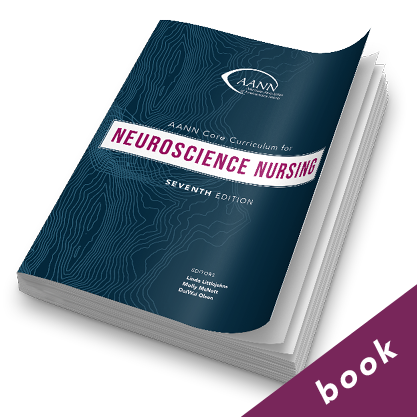
AANN Core Curriculum for Neuroscience Nursing, Seventh Edition
AANN member price: $175
Nonmember price: $255
The Core Curriculum is a comprehensive resource for practicing neuroscience nurses preparing for the CNRN exam. Expanded and updated, this brand-new edition offers crucial, real-life direction on the science and skills required to care for neuroscience patients in easy-to-digest sections and includes new figures and images and a list of relevant tools and resources at the end of each chapter.
AANN Core Curriculum for Neuroscience Nursing, Seventh Edition: Digital Version
Full Text
AANN member price: $125
Nonmember price: $225
Individual Chapters
AANN member price: $15
Nonmember price: $25
Purchase individual chapters or the entire text. The digital version of the book will be available for 2 years in the learning management system from the date of purchase. Don't miss Chapter 30: Strategies for Successful Standardized Test Taking.
Purchase the Digital Core Curriculum
CNRN Study Session: Recorded Review & Prep
AANN member price: $150
Nonmember price: $200
The CNRN Study Session: Review & Prep is used by candidates preparing for the Certified Neuroscience Registered Nurse (CNRN) examination to better understand your current knowledge as it applies to the certification and determine where additional studies are needed. Listen to instructor-led videos from Cindy Bautista and Michelle Dedeo and complete interactive knowledge checks to check your understanding in the following areas:
- Neurological Disorders
- Cerebrovascular
- Trauma
- Neurologic Tumors
- Infection & Immune
- Neurodevelopment
Participants can earn 5 CE contact hours by completing the modules and the evaluation.
For information on purchasing CNRN Study Session: Recorded Review & Prep for your institution, please contact AANN Member Services at info@aann.org.
Purchase CNRN Study Session: Recorded Review & Prep
CNRN Self-Assessment Examination
AANN member price: $70
Nonmember price: $90
The self-assessment examination consists of 75 questions covering the seven content areas of the CNRN examination. Consider using this tool as a pretest to better understand your current knowledge as it applies to certification or use it as a gauge to determine where additional studies are needed as you prepare to sit for the exam.
Purchase the CNRN Self-Assessment Examination
CNRN Exam Prep Package
The CNRN Exam Prep Package contains three of AANN's best-selling products: CNRN Study Session: Recorded Review & Prep, CNRN Self-Assessment Exam, and the AANN Core Curriculum, 7th edition book. When you purchase the CNRN Exam Prep Package, you save $60 compared to buying the products individually.
Purchase the CNRN Exam Prep Package
Adventures in Neuroscience DVDs
The Adventures in Neuroscience DVD series features international speaker, author, and coeditor of the Core Curriculum for Neuroscience Nursing, fifth edition, Linda Littlejohns, MSN RN CCRN CNRN.
Correlative Neuro Anatomy
AANN Member price: $34.95
Nonmember price: $36.95
This DVD offers a comprehensive review of the normal structures and pathways of the brain and brainstem including chapters on cerebral lobes, basal ganglia, and thalamus and hypothalamus
Purchase the Correlative Neuro Anatomy DVD
Comprehensive Neuro Assessment
Member price: $44.95
Nonmember price: $46.95
A sound knowledge of normal and abnormal findings during assessment can facilitate early recognition of potential problems in a patient. This DVD includes case studies and chapter assessments exploring the purpose of examination and different assessment scales.
Purchase the Comprehensive Neuro Assessment DVD
Spinal Cord Anatomy
Member price: $34.95
Nonmember price: $36.95
This DVD explains the anatomy of the spine and spinal cord, using cadaver specimens to demonstrate structure, and details normal and abnormal findings.
Purchase the Spinal Cord Anatomy DVD
Ischemic Cerebrovascular Event
Member price: $44.95
Nonmember price: $46.95
The signs and symptoms that accompany an ischemic event are essential to stroke patient care. This DVD reviews assessment of signs and symptoms that accompany an ischemic event and addresses management options, criteria selection, and evidence-based approaches.
Purchase the Ischemic Cerebrovascular Event DVD
Clinical Practice Guidelines
Free to download!
The Clinical Practice Guideline (CPG) series are a collection of free to download material that provides an overview on caring for specific patient populations with neurological injuries and equips nurses with tools that will assist them in delivering the optimum quality-focused patient care.
CPG topics include
- care of the patient with aneurysmal subarachnoid hemorrhage
- pediatric brain tumor
- adult brain tumor
- myasthenia gravis
- movement disorders and deep brain stimulation
- preoperative and postoperative cervical spine surgery patient care
- neurologic assessment of the older adult.