Join a Community of Neuroscience Leaders
AANN supports your professional development through quality education opportunities, collaboration and networking in local chapters, discounts on neuroscience products, and more!
Stroke Coordinator Boot Camp: Summer Road Trip Edition
Join us on Wednesday, August 5, 2026, from 10 am–3 pm CT (8 am PT / 9 am MT / 11 am ET) on Zoom for 4 CE contact hours. This immersive learning experience is designed to guide stroke coordinators through key milestones of their role, like stops along a well-planned road trip. Whether you're new to the journey or looking to fine-tune your route, this boot camp will equip you with essential tools, insights, and strategies to navigate your responsibilities with confidence.
AANN Amplify: A Virtual Symposium
AANN Amplify: A Virtual Symposium will be held on Thursday, September 10, 2026 with sessions presented on Setting Priorities of Care for Stroke Patients and Neurocritical Care Nursing Challenges. Earn up to 4 CE contact hours.
Neuroscience Nursing Annual Conference
In March 2026 the Neuro-APP Symposium, Annual Conference, and Stroke Conference were combined into one super event: the AANN Annual Conference: Uniting Expertise, Elevating Care. Thanks to everyone who joined us in Dallas, TX from March 21-24, 2026. Access recorded sessions and claim CE by June 30th.
FEATURED PRODUCTS
Neuro-APP Certificate Program
The Certificate Program for the Neuroscience Advanced Practice Provider (Neuro-APP) is an assessment-based certificate program that uses instructional design principles to deliver an online self-study educational course followed by post-assessments. Earn 12 CE contact hours and 2 pharmacology hours. Pre-order now to save 10% and you will receive access to the program in July.
Certificate Program for the Spine Healthcare Professional
The Certificate Program for the Spine Healthcare Professional is an assessment-based certificate program that uses instructional design principles to deliver an online self-study educational course followed by post-assessments. Earn 11 CE contact hours and 1 pharmacology hour.
Nurses in the Media
This unique program includes training specifically for nurses, by a nurse and has content you can’t get anywhere else. This course includes: 10 media competencies for nurses, uses and benefits of the media, necessary media skills, knowing your audience, how to create a sound bite, developing a media plan, ways to engage with the media, writing a pitch email, and more! Impact public health by completing the Nurses in the Media program and making your voice heard as a neuroscience nurse.
AANN NEWS
Neuro Specialty Quick Guides
The FREE guides provide a list of competencies and quick reference items for specific specialties. Download the list of available quick guides with QR codes you can scan to pull up each guide. Print the document and display it at your facility for easy reference.
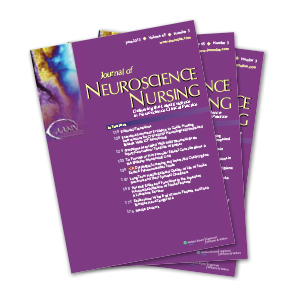
Journal of Neuroscience Nursing (JNN)
Submit a manuscript to the JNN. Visit the JNN website for more information. AANN members receive FREE CE from the JNN. To receive free JNN online CE, use your AANN member coupon code (found on the members only page) on the Nursing Center CEConnections website for JNN.
EVENTS | View all
| Stroke Coordinator Boot Camp: Summer Road Trip Edition Aug 05, 2026 - Aug 05, 2026 |
| AANN Amplify: Virtual Symposium Sep 10, 2026 - Sep 10, 2026 |